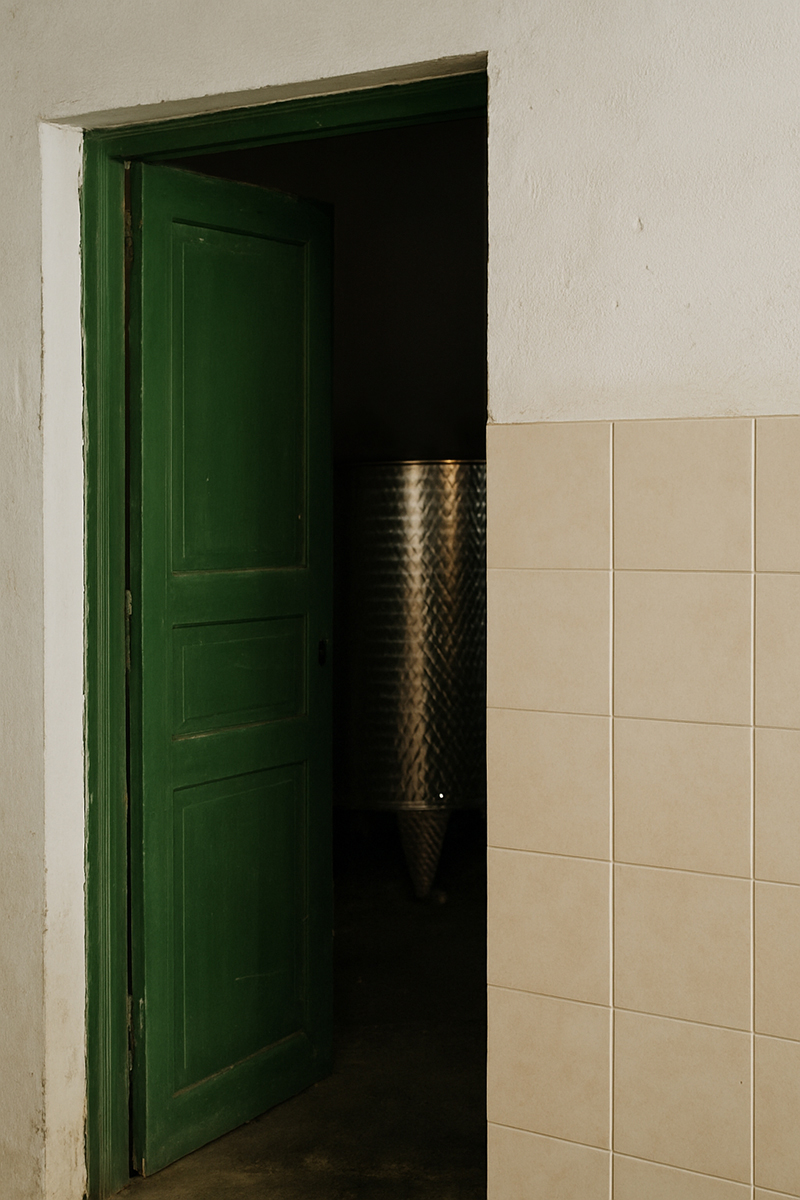
The homemade Commandaria locals make, and the one you find in shops, are two different wines.
If you live in a Commandaria village, you probably already know. It’s not some well-kept secret, just something people rarely talk about. That silence has consequences though: it fuels tension, distorts markets, and slowly erodes pieces of our Cypriot wine heritage.
Hence this entry.
PDO Commandaria vs Homemade Commandaria
Our village, Agios Mamas, has fewer than a hundred residents but four Commandaria wineries. You’d think that would be enough, yet people still make their own homemade Commandaria wine, as they always have.
It’s not about adding a personal touch.
They really are different wines.
Today, commercial PDO Commandaria is regulated under legislation first introduced in 1990. The rules have roots in the traditional process, but also the influence of the centuries. The wine has been reshaped by commercial pressures, international winemaking standards, and colonial influence.
Change is by no means a bad thing. I think it’s one of the main reasons that Commandaria has survived for so long — adaptability.
But while commercial Commandaria has grown, wineries adapting, processes changing — the people at home remain unphased. They stick to a simple process, passed from generation to generation, with little concern for regulation or marketability.
Sun-drying
Local: Shorter drying time, aiming to build sugars and flavour while limiting evaporation.
PDO: Sun-dried to a minimum sugar level
Vinification
Local: wild yeasts, spontaneous fermentation, no fortification
PDO: Commercial and wild yeasts allowed, fortification optional
Maturation
Local: no maturation
PDO: minimum 2 years in barrels
Profile
Local: Bright acidity, dominant stone fruit, similar to drinking fresh apricot juice
PDO: Refined balance, dominant dried fruit, tertiary and caramelised characteristics
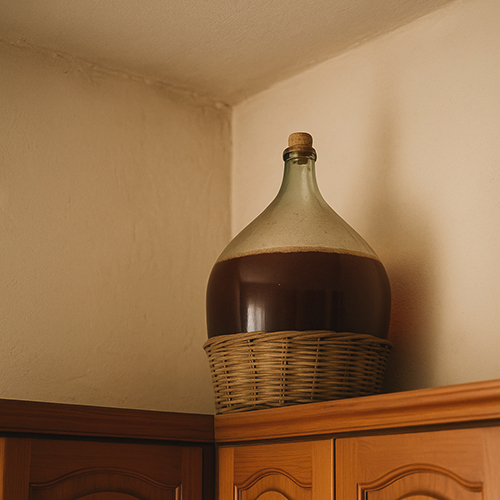
For any better versed readers, I am not referring to oinos vasis, the base wine that eventually becomes PDO Commandaria through oak ageing. At first glance, they seem similar, and in some ways they are. But differences in production and philosophy, result in very different experiences.
The base wine is produced on the books, under regulatory oversight, because it has to be approved for eventual maturation. Local homemade Commandaria, on the other hand, is made entirely off the books.
There’s no reason to target specific sugar levels at harvest or sun-drying, or follow formal specifications. Everything is done by feel, or based on experience.
As far as the producers are concerned – this is Commandaria wine proper.
Another key difference, is maturation. Barrels are mandatory for commercial production today, but they were not historically part of Cypriot winemaking. In homes, oak was never used — people relied on clay instead. That’s a topic for another time, but it’s a key difference worth noting when comparing how Commandaria has evolved.
The local wine is purposefully made to be enjoyed fresh and is even celebrated in the first few months after harvest. Most people drink it within the year, saving only a demijohn or two for longer oxidative ageing.
Fortification is another. For locals, it’s unheard of. A purely commercial process introduced during British colonial times for large wineries. Most home producers have no idea how to do it, or why it would even be needed.
Anecdotally, there are cases where confused locals have added Zivania (Cypriot grape spirit) to their Commandaria instead of neutral alcohol, simply because they heard the concept without fully understanding it.
The Black Market for Homemade Commandaria
Even regulated Commandaria only exists because it is granted exceptions from certain contemporary winemaking rules. Not many wines can be made this way.
But because it’s considered “traditional,” it gets a free pass — just like blue cheese gets one for being, essentially, mouldy.
The homemade version, however, deviates from the regulated process, so it doesn’t qualify as PDO Commandaria wine or for any of those exceptions.
So it can’t be sold at all — legally.
But that has never stopped people from trying.
There are two main forces. First, the people, who want to make a living off their wine — the wine they consider the true Commandaria, one they’ve been making for longer than regulations, or even the government, have existed. For them, PDO requirements are alien, expensive.
The other force is restaurateurs. Fresh “Commandaria” is genuinely good — really good — your eyes open wide the first time you taste it. It works wonders on tourists, offering something unique and unexpected, whereas the aged version sits closer to conventional dessert wines like Port or Sherry.
More importantly, regulation and ageing have extra costs — so much that it doesn’t make sense to use in cooking.
Faced with a choice between using generic sweet wines or supporting local heritage (and the local economy), many quietly choose the black market.
Operating in the dark, though, comes at a cost: quality can be inconsistent, and the way the wine is sold can be, at times, questionable.
It’s the reality of any shadow market. Not necessarily because people set out to do wrong, but because working in secrecy limits oversight and consistency.
It’s a ridiculous situation, but that’s the reality.
Government Crackdown
The government has always known this was happening. For years, they mostly looked the other way, whether out of understanding or simply because they didn’t see it as a priority.
Recently, though, in the name of protecting PDO Commandaria wine, they’ve begun to take some action, checking producers, and seizing illicit wine.
Locals are left dumbfounded, fearful to sell their wine and sitting on stocks they can’t move. That stock, once prized for its freshness, slowly loses the very quality that set it apart in the first place.
And then comes the absurd part: those same producers, now holding unsellable wine, complain to the government that their Commandaria grapes don’t sell. The government, that helped create the mess, then steps in to support and reimburse them — further highlighting how disconnected regulation and reality have become.
I’m simplifying things here, but all of the above is true.
A Personal Reflection
As a commercial commandaria winery, we work with regulated PDO Commandaria, but I’d be lying if I didn’t admit we drink an unhealthy amount of the fresh stuff when we have it around. The top three Commandaria wines I’ve ever tasted were unaged. I remember all three vividly, and my mouth still waters.
That said, one is not better than the other. I value both, and find it hard to treat them as separate wines.
The current situation hurts to witness. It’s the result of misguided and misinformed regulation, not born of bad intentions, but still deeply flawed.
I believe there’s room for both wines, on tables and on shelves. But how do you move forward? What would it mean for Commandaria if both versions were allowed to coexist openly?
And what would it take to have that conversation?